Research Article | | Peer-Reviewed

Characterization and Assessment of Soil Acidity Status Under Different Land UseTypes and Soil Depths in Lalistu Cheri Watershed, Sibu Sire District, Western Ethiopia

Received: 21 March 2025     Accepted: 7 April 2025     Published: 22 May 2025
Views:       Downloads:
Abstract

Soil acidity, a significant form of chemical soil degradation, is one of the most pressing challenges in Ethiopia, particularly in the highlands. It severely impacts agricultural productivity across much of the country. Owing to its impact on crop production and productivity, it is a critical issue that requires immediate attention in most highlands in Ethiopia. This study was conducted at the Lalistu Cheri watershed, which is located in the Sibu Sire District of the western zone of the Oromia region, Ethiopia, with the objective of characterizing and assessing the soil acidity status under different land use types and soil depths. Replicated composite soil samples were collected from three representative land use types (cultivated, grazing, and eucalyptus plantation lands) and two soil depths (0-20 and 20-40 cm) by X-patterns along transects and analyzed via standard laboratory procedures. The results revealed spatial variation in the soil properties among the land use types and soil depths. The soils in both cultivated and eucalyptus plantation land were strongly acidic (pH<5.5), whereas those in grazing land were moderately acidic. The highest (54.89%) and lowest (43.73%) clay contents were recorded in the soils of cultivated and grazed lands, respectively, whereas the sand content was greater (36.11%) in the eucalyptus plantation land. The relatively highest bulk density (1.36 g cm-3) was recorded in the grazed land soils, followed by the cultivated land soils (1.32 g cm-3). Both the exchangeable acidity and aluminum content in all land use types decreased with increasing soil depth, which was consistent with their acid saturations. The organic carbon content ranged from 2.30% at the subsurface layer of the cultivated land to 3.44% at the surface layer of the grazing land soils, whereas the total nitrogen content ranged from 0.19% to 0.30%. Available P ranged from 7.31 mg kg-1 to 12.61 mg kg-1. The highest Ca, Mg, Na, and K contents (8.92, 5.76, 0.30, and 1.26 Cmol (+) kg-1, respectively) were recorded in the soils of the grazing land. The amount of PBS used ranged from 35.14% to 78.45%. The CEC and ECEC of the soils in the three land use types also increased consistently with increasing soil depth. Micronutrient concentrations decreased with soil depth. The Fe and Mn contents ranged from 0.54 and 4.42 mg kg-1 in the subsurface layer of the grazing land and eucalyptus plantations, respectively, to 10.58 and 12.14 mg kg-1 in the surface layer of the eucalyptus plantations and grazing land soils, respectively. Cu and Zn also ranged from 1.52 and 0.29 mg kg-1 to 3.16 and 0.85 mg kg-1, respectively. The study suggests that both CL and EPL soils exhibit the highest acidity and require soil management practices, such as lime application, to reduce acidity and improve soil fertility. On the other hand, GL soils show more favorable conditions for nutrient retention and pH.

Published in American Journal of Chemical and Biochemical Engineering (Volume 9, Issue 1)
DOI 10.11648/j.ajcbe.20250901.12
Page(s) 18-37
Creative Commons

This is an Open Access article, distributed under the terms of the Creative Commons Attribution 4.0 International License (http://creativecommons.org/licenses/by/4.0/), which permits unrestricted use, distribution and reproduction in any medium or format, provided the original work is properly cited.

Copyright

Copyright © The Author(s), 2025. Published by Science Publishing Group

Keywords

Depth, Land Use Types, Soil Acidity, Surface, Subsurface

1. Introduction
1.1. Background and Justification
Soil degradation is the main obstacle influencing the agricultural systems of many developing countries. This is a major concern for Ethiopia, a growing country in the Horn of Africa. Soil acidity, a consequence of chemical soil degradation, is an issue that impacts soil productivity in Ethiopia . Owing to its impact on crop production and productivity, it is a critical issue that requires immediate attention in most of Ethiopia's highlands and is one of the primary issues that significantly hinder agricultural productivity . These problems have complicated sustained agricultural output in nearly all of Ethiopia's producing areas.
According to Ethio SIS , soil acidity affects approximately 43% of Ethiopian arable land, whereas strongly acidic soils (pH 4.1-5.5) account for approximately 28.1% of Ethiopian soils. Numerous studies have reported that lacks of certain nutrients, such as phosphorus, calcium, and magnesium, and the presence of compounds that cause Phytotoxicity, such as soluble aluminum and manganese, are the two main variables that restrict the fertility of acidic soils. Because of the possible toxicity of manganese and aluminum, as well as deficiencies in phosphorus, calcium, magnesium, and molybdenum, strongly acidic soils are usually unfavorable for cultivation .
Furthermore, soil acidity is one of the key factors impeding and limiting profitable and sustainable agricultural output in many parts of the world, including African nations such as Ethiopia. According to , it has a detrimental effect on nutritional availability and results in Mn and Al toxicity. In addition to these factors, soil acidity can cause rapid deterioration in the physicochemical characteristics of the soil, including the soil organic carbon, cation exchange capacity, soil structure, porosity, and texture. A lower soil pH can lead to a greater net charge (lower CEC), which can cause soil fertility to decline and ultimately reduce land production. According to Agegnehu , this illustrates the degree to which soil acidity threatens agricultural productivity and hence reduces food security, particularly in the Ethiopian highlands, where the environment is conducive to acidification processes. Furthermore, agriculture is one of the most significant environmental dangers to Ethiopian highlands, where agriculture is the primary source of income for most people . Acidity in soil results from the replacement of basic elements by hydrogen ions in soil colloids, which include Ca, Mg, Na, and K. These bases can be removed by anthropogenically driven methods such as excessive usage of fertilizers based on ammonium and continuous cropping without organic inputs or by natural processes such as leaching caused by rainfall .
The issue of soil acidity in Ethiopia is aggravated by excessive grazing, total clearance of crop leftovers from agricultural fields, and heavy rainfall that washes organic matter and basic cations away through soil erosion and leaching. The studies have shown that heavy rainfall regions in Ethiopia's west, northwest, southwest, and south are particularly affected by acidity in the soil. This poses a serious risk to the nation's capacity to produce agricultural products in the future because it increases the toxicity of aluminum (Al3+) in soil solutions, which reduces crop performance and the availability of vital plant nutrients .
1.2. Statement of the Problems
The degree of soil acidity and rates of acidification are of concern in the East Wollega Zone. Despite the fact that soil acidity has been highlighted as an issue that requires immediate attention in the western portion of Ethiopia, information on the influence of land use type and management techniques on soil fertility parameters throughout the nation, particularly the East Wollega Zone, is scarce. The state and scope of the problem at that specific location have not been recognized or quantified. As a result of this information gap, farmers must rely on one or two relatively acid-tolerant crops to survive, and the problem persists. Most grain productivity is low, and yield decline is common. The low production of crops in that area exposes farmers to food scarcity and indebtedness with credit as well as seasonal work. The causes of yield decreases due to soil acidity, as well as management approaches that help to overcome and/or worsen acidity problems are not precisely characterized and explained. Farmers and development agents were unaware of the presence of acidic soil in the area until recently because there are no evident symptoms on the crop other than a decrease in yield. Furthermore, no one knows which types of land use are most acidic. Similarly, the correlations between soil acidity and other variables, including texture, exchangeable acidity, acid saturation, pH, exchangeable bases, CEC, available P, available K, total N, and organic matter, have not been studied or measured.
Changes in land use and soil management can significantly affect soil fertility. For instance, the conversion of natural ecosystems to agricultural land typically leads to physical, chemical, and biological degradation of soils . Research conducted in various regions of Ethiopia has shown that prolonged intensive agriculture without proper fertilization has resulted in a decline in soil nutrient levels .
Additionally, Achalu reported that deforestation and cultivation of virgin tropical soils frequently result in the loss of N, P, S, and other plant nutrients, which increases the acidity of the soil by causing toxicity from (Al), (Fe), and (Mn). The consequences of land use changes and associated soil management methods on soil quality have recently attracted increasing attention because of their ecological and socioeconomic implications. As a result, prompt identification of land use change and its possible impact on soil quality metrics is a necessary precursor for any restorative action, effective land use planning, and resource management .
In this context, a detailed understanding of soil acidity is needed to adopt sustainable land management approaches to protect soil fertility and increase acidic soil production. A greater understanding of soil acidity may assist farmers by increasing output, as well as rural land use planners and policymakers, by developing more effective land management plans that may be implemented by neighboring farmers and other agro ecological zones across the country. This study seeks to fill a knowledge gap concerning soil acidity problems in the study area by characterizing and assessing the acidity status of soils under different land use types and soil depths. Although various studies have been carried out on the influence of land use type on soil physical and chemical properties, these studies are still incomplete in western Ethiopia, especially in the Sibu Sire district. Therefore, this study aimed to characterize and assess soil acidity status under different land use types and soil depths in the Lalistu Cheri watershed, eastern Wollega, Ethiopia.
1.3. Significance of the Study
This project provided firsthand information on the impacts of land use and soil depth on soil acidification, as soil acidity concerns in the East Wollega Zone have received little attention thus far. These findings will be critical in assisting the government in developing appropriate rules for soil acidity amendments in the area, as the study addresses the characterization and status of acidity in soils under different land use types and soil depths.
The findings are beneficial to agricultural research institutes, extension agents, and interested parties such as development agencies and lime industry agencies working to initiate soil acidity amendments for sustainable land use and soil productivity in the area. They also found value in the outcomes. Overall, the research benefited soil productivity and sustainable land use in the area. In general, research has raised public awareness of the area’s diverse land use types related to soil acidity and quick response.
1.4. Objectives
1.4.1. General Objective
To characterize and assess status of the acidity of soils under different land use types and soil depths in the study area.
1.4.2. Specific Objectives: The Specific Objectives of the Study Were to
1) assess the acidity status of soil under different land use types and soil depths in the study area.
2) characterizes the selected physicochemical properties of acidic soil under different land use types and soil depths
2. Materials and Methods
2.1. Description of the Study Area
2.1.1. Location
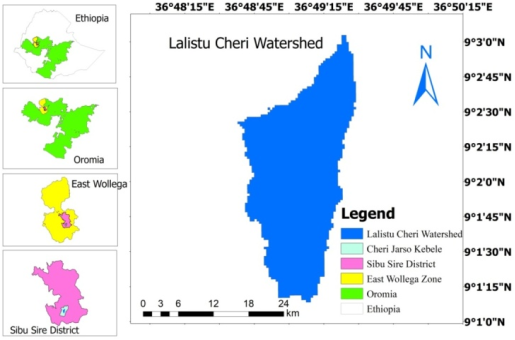
The study was conducted in the Lalistu Cheri watershed in the Sibu Sire district, east-Wollega zone of the Oromia regional state, western Ethiopia. It is approximately 281 kilometers from the country's capital, Addis Ababa. Nekemte, the administrative town in the East Wollega Zone, is 50 kilometers long. Geographically, the watershed is situated between 9°1'8.28" and 9°3'2.84 latitude and 36°48'37.82 and 36°49'28.86 E longitude, at an altitude of 1510--1810 m above sea level (Figure 1).
Figure 1. Location map of the study area.
2.1.2. Climate
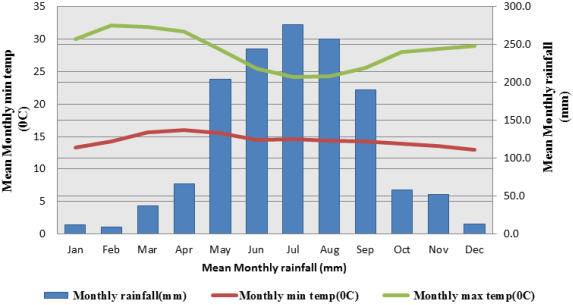
The study district covers 1,048.56 square kilometers in total (104,845.6 hectares), approximately 74.2% of its surface area has a midaltitude agro climate, 18.27% has a lowland agro climate, and the remaining 7.53% of the land has a highland agro climate . The Ethiopian Meteorological Institute's ten-year meteorological statistics (2011-2022) reveal an average annual rainfall of 1420.7 mm, with a unimodal rainfall pattern, and annual mean minimum and maximum monthly temperatures ranging from 14.4 to 28.21 °C. The coldest month is December, while the warmest months are February and March (Figure 2). The rainy season runs from May to September. July had the greatest average annual rainfall. According to the climatic categorization defined in the agro ecological zones of Ethiopia (MoA, 2000), the Lalistu Cheri watershed is part of the Weyna Dega agro ecological Zone .
Figure 2. Mean monthly rainfall (mm) and mean monthly temperature (0°C) of the study area from 2011--2022. Source: Ethiopian Meteorological Institute (2024).
2.1.3. Farming System and Land Use Types
Agriculture is the primary source of income for district residents. A mixed agricultural method dominates agriculture in the district. Crop production was the most important, followed by livestock production. Maize (Zea mays L.) accounts for 25.6% of cultivated land, followed by tef (Eragrostis tef) (20.5% of cultivated land), sorghum (Sorghum bicolor L.) (16.5% of cultivated land), 'Nuog' (13% of cultivated land), and finger millet (12.3% of cultivated land). Minor crops, such as vegetables; roots, such as hot pepper (Capsicum frutescence L.), sweet potato (Ipomoea batatas L.), and tubers; and perennial crops, such as coffee (Coffee arabica L.) and sugarcane (Saccharum officinarum L.), cover the remaining percentage of cultivable land . The dominant land use and land cover in the study district area include cultivated land, which accounts for approximately 70%; dense woodland, which also includes dominant tree species such as Eucalyptus and Juniper trees (20.8%); savannah grassland (3.5%); natural forest cover (0.7%); and settlements (5.18%). Farmsteads are spread across the agricultural region and are connected by trails or a few mud routes that are inaccessible during the rainy season .
2.1.4. Soil Types and Topography
The parent materials of the research area are dominated by granite, with minor indications of basaltic rocks. Dystric Nitisol and Orthic Acrisol are the most common soil types in the research region, according to the FAO (2006). The elevation of the research area ranged from 1,240 to 3,140 m above sea level .
2.1.5. Demographic Characteristics
This district has a total population of 102,228 according to the 2007 national census, with 50,717 men and 51,511 women. Of these, 10,243, or 10.02%, were urban inhabitants, while the bulk of people lived in rural regions where they were directly supported by agriculture and related activities .
2.2. Methodology
Research Design and Soil Sampling
First, a basic visual field survey was conducted during the off-season in January 2024 to acquire a comprehensive grasp of the variances in the study area; a physical observation was made to identify the major land use types. After the major land use types were identified, professional judgment and consultation with experts were employed to choose representative sampling points of interest. Accordingly, three representative sampling sites for each land use type—cultivated land (CL), grazing land (GL), and eucalyptus plantation land (EPL)—were selected via a simple random sampling method. The soil sampling points were geo-referenced via the GPS Garmin 60 (GPS) to obtain spatial information (latitude and longitude) as well as the altitudes of the sampling locations for each step. The watershed was chosen on the basis of the following criteria: (1) a high incidence of soil acidity issues, as determined by data from local farmers and the district's agricultural office, combined with field experts who have sufficient understanding of the area's agricultural activities and productivity constraints; (2) similar climatic conditions were used to minimize agro ecological influence. On the basis of the traditional agro ecology categorization system, the watershed was located in the Woina-Dega climate zone. Consequently, the Lalistu Cheri watershed in the Sibu Sire district was deliberately selected for this study since it is one of the districts where soil acidity issues have mostly arisen and have been documented by SSAO (2024) . The land-use history of this specific area was explored through physical field observations and conversations with people and agricultural professionals.
Composite soil samples were collected from two soil depths (0-20 cm and 20-40 cm) from each land use type in the replications. Plots 20 m × 20 m (400 m²) in size were built. Subsamples of soil were collected via X-pattern from the four corners and center of the square plots per the EthioSIS sampling instructions (EthioSIS, 2013) . Accordingly, replicate composite samples from three land use types and two soil depths were prepared for analysis. Additionally, a core ring sampler with a specified volume was used to collect undisturbed soil samples from the pits at the two depths near the sampling plot center, and a core sampler was used to determine the bulk density (Db). No soil samples were taken from prohibited locations, which include regions where animal dung has accumulated, areas where animal dung has recently fertilized and poorly drained, or any other location where representative soil samples cannot be obtained.
The site description sheet for every plot contained the following information during soil sampling: topography, crop type, land use type, sample depth, soil color, and fertilizer application history. The soil samples were thoroughly combined, divided into quarters, and weighed down to one kilogram. They were then sealed in plastic bags with tags that appropriately identified the land use type, soil depth, elevation, location, site number, field history, sampling date, and sample code. Dead plants, ditches, aged manures, damp patches, tree neighborhoods, and compost pits were not included in the sample collection process. This was done in an effort to reduce any variations that could result from other causes, such as the dilution of soil organic matter caused by farming. Finally, the composite soil samples were delivered to the laboratory of the Nekemte Soil Research Centre for examination of their physicochemical property characteristics. The collected soil samples from each land use type were air-dried, ground, and passed through a 0.5 mm sieve for OM and total nitrogen and a 2 mm sieve for other physical and chemical properties of the soil for physicochemical analysis. The Nekemte Soil Research Center conducted the majority of the soil studies. Potassium (K) and sodium (Na) analyses were conducted at the Batu Soil Research Center. All laboratory tests were carried out following the general standard laboratory soil analysis protocols outlined in the Ethiopian Agricultural Research Institute laboratory handbook issued by Sahlemedhin and Taye (2000) for the National Soil Research Center .
2.3. Laboratory Analysis
2.3.1. Analysis of Soil Physical Properties
Soil texture was analyzed using the Bouyoucos hydrometer method (ASTM No. 152, 1962) . After measuring the relative percentages of sand, silt, and clay, the USDA soil textural triangle was used to classify the soil into specific textural classes. Using undisturbed soil samples collected with a core sampler and dried in an oven at 105 °C per Gupta's (2000) instructions, the bulk density of the soil was determined . Using bulk density (BD) and particle density (PD) measurements, the total porosity of the soil samples was calculated (assuming that the average particle density of the mineral soil was 2.65 g cm-3). The total porosity (TP) was subsequently computed as the overall porosity (%), as shown in equation (1).
Total porosity (%) =1-BDPD*100(1)
2.3.2. Analysis of Soil Chemical Properties
The soil pH (soil: H2O ratio) in the 1:2.5 supernatant suspensions was determined potentiometrically via a digital pH meter (Rowell, 1994) . The method outlined by McLean (1965) was followed to measure the exchangeable acidity (Al and H) of a neutral 1 M KCl-extracted solution by titrating with a standard and a 0.02 N NaOH solution as a titrant. A standard solution of 0.02 M HCl was used to titrate and evaluate exchangeable Al in the soil from the same extract. The soil organic carbon content was determined using the Walkley and Black (1934) wet digestion methods, in which the carbon was oxidized under standard conditions with potassium dichromate (K2Cr2O7) in a sulfuric acid solution . The total nitrogen content was determined using the Kjeldahl method (Jackson, 1973) . The Av. P was determined after the soil had been treated with stannous chloride, ammonium molybdate, and sulfuric acid (Olsen et al., 1954) . In accordance with Baruah and Barthakur (1997) , the ammonium acetate extraction method (1 N NH4OAc at pH 7) was used to determine the cation exchange capacity (CEC). The same ammonium acetate extract was used to determine exchangeable cations, such as Na, Ca, K, and Mg, using flame photometry and atomic absorption spectrophotometer (AAS).The diethylenetriamine penta-acetic acid (DTPA) method was used to extract the extractable micronutrients (Fe, Mn, Cu, and Zn). The readings obtained from this approach were quantified via AAS by comparing them to standards at wavelengths of 248.3, 279.5, 324.7, and 213.9 nm for Fe, Mn, Cu, and Zn, respectively . The sum of base-forming cations (Ca2+, Mg2+, Na+, and K+) divided by the soil CEC and multiplied by 100 is the formula for percent base saturation (PBS) . The exchangeable bases and exchangeable acidity used together provided the effective CEC. Al+3 and H+, the charge equivalents of the acid-forming cations, are added together, and the ECEC of the soil is divided and multiplied by 100 to determine the percent acid saturation (PAS).
2.3.3. Sources and Types of Data
The primary data sources were soil data taken in the laboratory, and the secondary data sources were collected from published and unpublished documents, books and governmental reports.
2.3.4. Data Analysis and Statistical Procedures
Descriptive statistics were employed to analyze the soil properties across all land uses and soil depths. Simple correlation analysis was performed via the Statistical Analysis System (SAS) version 9.4 (SAS, 2004) to determine the magnitudes and directions of relationships between various physicochemical parameters within and among land use systems.
3. Results and Discussions
3.1. Characterization of Acidic Soil Under Different Land Use Types and Soil Depths in the Study Area
3.1.1. Soil Particle Size Distribution
Changes in land use and management practices significantly influence the morphological, physical, and chemical characteristics of soil, directly affecting agricultural productivity. Soil quality indicators, such as texture fractions—sand, silt, and clay—vary notably across land use types and soil depths (Table 1). Laboratory analyses revealed that sand and silt contents consistently decreased with increasing depth, while clay content increased.
Cultivated land soils exhibited the highest mean clay content (54.89%), followed by eucalyptus plantation soils (51.78%). The highest mean silt content (21.78%) was observed in the surface layers of cultivated land soils, while grazing land soils had the lowest clay (43.78%) and sand (24.33%) contents in the surface layer (0-20 cm). Conversely, cultivated land soils had the lowest sand content in the subsurface layer (20-40 cm). Eucalyptus plantation soils showed the highest mean sand content (36.11%) and the lowest silt content (16.56%) in both surface and subsurface layers.
The subsurface layer (20-40 cm) generally contained more clay, while the surface layer (0-20 cm) had higher sand and silt levels, indicating the downward migration of clay particles. The relatively higher sand content in surface soils may be attributed to selective erosion or particle movement. Larger sand and silt particles tend to remain on the surface due to their resistance to transport by wind or water. These processes, including weathering and eluviations, play a significant role in shaping soil texture over time.
Table 1 highlights that cultivated land soils had the highest clay and silt contents, while eucalyptus plantations exhibited the lowest silt content. The increased clay content in cultivated land's subsurface layers suggests long-term farming practices, including soil mixing and weathering has caused clay translocation from the surface to lower depths. These findings align with studies by Gebrelibanos and Assen; Chemada et al. , which noted higher clay concentrations in the subsurface layers of cultivated land compared to surface layers. Similarly, Kebebew et al. associated these patterns with prolonged agricultural activities.
Soil texture differences across land uses reflect the impacts of specific management practices, such as erosion and tillage, which influence particle size distribution, especially in surface soils. Human activities have accelerated these changes, emphasizing the significant role of land management in soil texture variation.
According to Hazelton and Murphy’s (2007) classification , the soils in this study were characterized by high clay content, moderate sand, and low silt levels. Both surface (0-20 cm) and subsurface (20-40 cm) soils were classified as clay using the USDA (1999) textural triangle , with no substantial differences observed across land use types or depths (Table 1).
Table 1. Mean of selected soil physical properties of the study area under different land use types and soil depths.

LandUse

CultivatedLand

EucalyptusPlantationland

GrazingLand

Parameters

SD (cm)

Range

Mean (±SEM)

SDV

Range

Mean (±SEM)

SDV.

Range

Mean (±SEM)

SDV.

Sand%

0-20

27-41

31.56±1.64

4.93

27-43

36.11±1.96

5.93

31-43

35.67±1.49

4.47

20-40

17-29

24.33±1.25

3.74

25-37

31.67±1.25

3.74

29-37

32.33±1.00

3.00

Silt%

0-20

19-23

21.77±0.46

1.39

15-25

20.11±1.06

3.18

15-23

20.55±0.87

2.60

20-40

19-23

20.78±0.52

1.56

15-21

16.56±0.80

2.40

15-21

18.11±0.59

1.76

Clay%

0-20

38-52

46.67±1.70

5.10

34-54

43.78±2.61

7.84

38-54

43.78±2.01

6.04

20-40

52-60

54.89±0.89

2.67

48-58

51.77±1.18

3.53

44-54

49.56±1.19

3.57

STC

0-20

Clay

Clay

Clay

20-40

Clay

Clay

Clay

BDgml-3

0-20

1.19-1.29

1.26±0.01

0.03

1.09-1.19

1.15±0.01

0.03

1.26-1.32

1.29±0.01

0.02

20-40

1.25-1.39

1.32±0.01

0.04

1.15-1.29

1.24±0.02

0.06

1.25-1.40

1.36±0.01

0.03

Tp%

0-20

51.32-55.09

52.58±0.42

1.25

55.09-58.87

56.65±0.37

1.11

50.09-52.45

51.15±0.30

0.89

20-40

47.55-52.83

50.10±0.56

1.68

51.32-56.6

53.25±0.73

2.19

47.17-50.57

48.68±0.32

0.96

BD = Bulk Density; TP = Total porosity; STC; Soil Textural Class, SDV; Standard Deviation, SEM; Standard Error Mean, S.D: soil Depths
3.1.2. Soil Bulk Density and Total Porosity
Bulk density (BD) is an essential physical property for assessing soil fertility, varying across land use types and soil depths (Table 1). BD increased consistently with depth in all land uses, with the highest values observed in grazing land (GL) due to livestock trampling. Cultivated land (CL) showed intermediate BD values, influenced by soil compaction from tillage and continuous cultivation, while eucalyptus plantation land (EPL) had the lowest BD, attributed to plant litter accumulation and minimal trampling. These findings align with studies by Muche et al. and Jemal and Tesfaye , who reported similar trends in GL and EPL soils, respectively.
The increase in BD with depth (Table 1) can be explained by soil compaction from overlying layers , changes in soil texture and structure , and reduced organic matter and vegetation in deeper layers . Wakene and Price et al. also found lower BD in surface layers compared to subsurface layers, reflecting the influence of organic matter and root activity near the surface. Lower BD in EPL soils likely results from higher organic content and root activity, which promote soil porosity and aggregation. In contrast, higher BD in CL’s subsurface may be linked to prolong tillage and limited crop rotation, which compact the soil over time.
Hazelton and Murphy classified BD in the study area as low to moderate, suggesting minimal risk of compaction hindering root growth or water flow (Table 1). Similarly, Gupta identified BD values between 1.1 and 1.4 g/cm³ as ideal for mineral soils, supporting effective aeration, water movement, and microbial activity—favorable conditions for plant growth.
Total porosity showed an inverse relationship with BD, decreasing as BD increased with soil depth (Table 1). Surface soils in EPL had the highest porosity (56.65%), while GL’s subsurface soils exhibited the lowest porosity (48.68%). The greater porosity in EPL soils may be attributed to plant litter accumulation and the absence of trampling, which maintain space between soil particles, as also observed by Jemal and Tesfaye . Subsurface soils, being more compacted and containing less organic matter, exhibited reduced pore spaces.
The interplay between BD and porosity across land uses highlights favorable conditions for root growth and water movement in surface soils, where lower BD and higher porosity create looser, more aerated layers. According to Landon , ideal porosity levels are 40% for sandy soils and 50% for clay soils to support soil life. The study area meets these benchmarks, minimizing risks of water logging and surface runoff while maintaining conditions conducive to agricultural productivity.
3.2. Soil Chemical Properties
The following sections offer an overview of soil acidity under various land use types and soil depths. They cover key aspects such as soil pH, exchangeable acidity, acid saturation, and the levels of exchangeable base cations. Additionally, the status of major soil fertility parameters and micronutrients is discussed, along with their relationships to soil acidity.
3.2.1. Soil Reaction (pH)
Soil pH is a crucial indicator of acidity and plays a significant role in nutrient availability for plants and soil organisms. While natural factors such as plant type, rainfall, and parent material influence soil pH, human activities, including cultivation, can lead to soil acidification. Topsoil pH tends to decrease due to the accumulation of organic acids from plant roots, the use of acid-forming fertilizers, crop removal, and the replacement of cations by hydrogen ions.
Soil pH generally increases with depth across various land uses. Grazing land (GL) soils exhibit the highest pH, followed by eucalyptus plantation land (EPL) and cultivated land (CL) soils. This pattern suggests the downward movement of basic cations, which is supported by data in Tables 2 and 4. Erosion could also contribute by washing away basic cations from upper layers. Among the land uses, GL soils have the highest average pH in the subsurface (5.74), while CL soils exhibit the lowest surface pH (5.14), followed by EPL soils with a surface pH of 5.27.
The lower pH in CL soils is likely due to the loss of basic cations from crop removal and intensive tillage, which accelerates nutrient leaching. The use of ammonium fertilizers and reduced organic matter from erosion further lowers pH in cultivated soils. These findings are consistent with studies by Gebrekidan and Negassa and Yimer et al. , which reported that cultivated lands tend to have more acidic soils compared to uncultivated ones. Ongoing crop removal, erosion, and acidifying fertilizers all contribute to this trend, alongside microbial oxidation and the release of organic acids from decomposing plant material.
Low soil pH also impacts the charge of soil colloids, limiting the soil’s cation exchange capacity (CEC) and its ability to retain nutrients. In EPL soils, acidity may be influenced by the uptake of basic cations by eucalyptus trees, combined with slow nutrient return and canopy effects that promote leaching. Eucalyptus species release acidic compounds, such as benzoic and cinnamic acids, which further lower soil pH and can inhibit some crop growth .
In areas with deeper-rooted vegetation or high rainfall, increased soil acidity is often observed due to the leaching of basic cations, especially from surface soils . This trend is evident in the Lalistu Cheri watershed, where soil pH increases with depth. Studies by Wakene and Habtamu et al. also report higher pH in subsurface layers, linking this pattern to the accumulation of base cations from leaching and slower weathering rates at greater depths .
Alkalinity increases with base cation concentration, while acidity, associated with aluminum and hydrogen ions, lowers pH. This explains the lower pH in CL and EPL soils, where higher exchangeable acidity is present. According to Tekalign , Lalistu Cheri soils range from strongly acidic (4.5-5.2) in the surface layers of CL and EPL soils to moderately acidic (5.3-5.9) in the subsurface layers and both layers of GL soils (Table 3). The region’s high rainfall likely exacerbates this effect by leaching basic cations and concentrating H+ and Al³⁺ ions, as noted by Tegenu et al. .
3.2.2. Exchangeable Acidity and Aluminum and Percent Acid Saturation
High rainfall can accelerate erosion, leading to the leaching of basic cations and resulting in soil acidity. This acidity disrupts nutrient conversion and reduces the availability of essential nutrients for plants. Differences in exchangeable acidity across land uses suggest that land management significantly affects levels of exchangeable aluminum (Al) and hydrogen (H) ions, which comprise soil exchangeable acidity. In the surface layer (0-20 cm), eucalyptus plantation lands (EPL) showed the highest exchangeable acidity (4.14 cmol (+) kg-1), followed by cultivated land (CL) (3.04 cmol (+) kg-1), while the subsurface layer (20-40 cm) of grazing land (GL) had the lowest (0.70 cmol (+) kg-1). Acid saturation percentages mirrored these trends, with the highest observed in EPL and the lowest in GL, indicating that soil pH and exchangeable acidity vary across land uses. The relatively low pH in EPL and CL (under 5.5) promotes exchangeable Al³⁺, which becomes dominant at these sites.
EPL soils had notably high exchangeable Al values, with the highest measured in the surface layer. This aligns with findings by Temesgen et al. (2014), Kebebew et al. (2022), and Aliyu et al. (2023) , who observed that eucalyptus plantations exhibit elevated exchangeable acidity. Despite higher acidity, eucalyptus trees remain unaffected due to their deep-root systems, which allow them to access leached nutrients in the subsoil, making them resilient in acidic conditions.GL has lower exchangeable acidity than CL, likely due to its higher organic matter and absence of fertilizer application. By contrast, CL surface soils exhibit higher exchangeable acidity because of continuous cultivation and fertilizer use, particularly with diammonium phosphate and urea. Other studies corroborate these findings, linking high exchangeable acidity in cultivated soils to intensive farming and chemical inputs. The elevated acidity in CL highlights the impact of intensive farming and crop uptake of basic cations, while GL benefits from more stable soil quality. High exchangeable Al³⁺ and acid saturation in CL soils are partly due to tillage and crop uptake of Ca²⁺, which leads to further leaching and mixing of soil to lower depths. Similar outcomes are documented by Gebreyesus (2016) , attributing these conditions to chemical fertilizers and intensive agricultural practices that increase soil acidity and acid saturation.
The relatively low exchangeable acidity and acid saturation in GL can be attributed to its higher pH and organic matter, which may complex with Al. In weathered soils, organic carbon and nitrogen contents are generally lower, while exchangeable Al and acidity levels are higher . However, GL retains some acidity due to basic cation uptake by pasture species like grasses and legumes, which may contribute to soil acidity. Limited biomass return from these species further reduces nutrient recycling, and erosion exacerbates this effect. Across all land uses, the subsurface soils (20-40 cm) had lower exchangeable acidity and acid saturation percentages than the surface soils (0-20 cm).The observed decrease in exchangeable acidity from surface to subsurface layers is likely due to solute movement, which leads to base cation accumulation at greater depths. This aligns with studies by Mohammed et al. (2005), Getachew and Tilahun (2017), and Tolesa et al. (2022) [63, 64, 65], which also report a decline in exchangeable acidity with depth due to increasing basic cations along the soil profile. Exchangeable acidity, comprising weak organic acid ions and compounds like Al(OH)²⁺ and Al(OH)2+, remains at the soil’s colloidal surfaces and is closely related to soil pH . Accordingly, EPL and CL soils show strong acidity. According to soil acidity management guidelines by the Ministry of Agriculture and Rural Development (2007) , acid saturation in cultivated soils often exceeds the tolerance limits for local crops, such as cabbage, carrots, tomatoes (1%), onions, field beans (5%), wheat, barley (10%), and maize, potatoes, and teff (20-40%), underscoring the challenges of soil acidity for crop productivity in the area.
Table 2. The mean values of pH, Ex. Acidity, Ex. Al+3 and PAS% soil as influenced by land use type and soil depth in the study area

Landuse

CultivatedLand

EucalyptusPlantationLand

Grazingland

Parameters

S.D (cm)

Range

Mean±SEM

SDV

Range

Mean±SEM

SDV

Range

Mean±SEM

SDV

pH(H2O)

0-20

4.96-5.36

5.14±0.05

0.14

4.98-5.43

5.27±0.04

0.13

5.39-5.74

5.58±0.04

0.12

20-40

5.14-5.61

5.47±0.05

0.14

5.19-5.59

5.48±0.04

0.13

5.54-5.91

5.74±0.05

0.14

Ex.Acidity

0-20

2.43-3.47

3.04±0.12

0.36

3.51-5.39

4.14±0.19

0.58

0.43-1.52

0.95±0.14

0.42

20-40

1.09-3.18

2.25±0.23

0.68

1.83-3.58

2.73±0.20

0.60

0.32-1.21

0.70±0.12

0.35

Ex.Al

0-20

0.69-3.24

1.93±0.28

0.83

2.63-5.22

3.64±0.28

0.83

0.14-1.16

0.69±0.13

0.38

20-40

0.81-2.78

1.76±0.25

0.74

1.62-3.41

2.23±0.20

0.61

0.08-0.96

0.49±0.11

0.34

PAS%

0-20

19.27-48.46

32.39±2.97

8.94

24.31-49.89

41.46±2.62

7.87

2.98-11.64

6.26±0.97

2.92

20-40

10.28-27.18

18.98±1.98

5.93

13.64-26.08

20.49±1.54

4.61

2.13-7.33

4.10±0.66

1.97

Ex. Al; Exchangeable Alumunium, PAS; Percent Acid Saturation, SDV; Standard Deviation, SEM; Standard Error of Mean, S.D: soil Depts.
3.2.3. Soil Organic Carbon
Organic carbon (OC) levels, a key indicator of soil health, vary across land use types and decrease with soil depth, as shown in Table 3. Among the land uses, grazing land (GL) had the highest mean OC content in the surface layer (3.44%), followed by eucalyptus plantation lands (EPL) with 3.00%. Cultivated land (CL) had the lowest mean OC content in the subsurface layer (20-40 cm) at 2.30%. Across all land uses, OC content was consistently higher in the surface layer, with GL > EPL > CL. The relatively low soil organic carbon (SOC) in CL (2.30%) likely results from continuous cultivation, crop residue removal, limited organic inputs, and increased oxidation due to tillage . This highlights the impact of intensive agriculture on reducing soil organic carbon.
In CL, crop residue removal and insufficient organic inputs fail to offset SOC losses. Frequent tillage, limited organic inputs, and full removal of residues further reduce organic matter. In contrast, the minimal soil disturbance in GL and EPL contributes to higher OC content. GL’s surface soils contain more OC than EPL, possibly due to the grass roots that enrich GL soils with organic matter. Studies by Urioste et al. support this, linking grass roots and fungal hyphae in grasslands to higher organic content. These findings are consistent with studies in the Kabe watershed, Ethiopia, by Assefa et al. and in the Shihatig watershed, Northwest Ethiopia, by Asmare et al. , which also found higher SOC in GL compared to EPL and CL. Similarly, Malo et al. reported lower organic carbon in CL soils than in EPL and GL. In Ethiopia, cultivated soils typically have low organic matter due to inadequate organic material application, complete biomass removal, deforestation, and intensive cultivation , all of which accelerate organic carbon loss.
The downward decline of SOC within the soil profile can be explained by the higher rate of surface decomposition of plant litter, leaving less organic matter at greater depths. Studies by Chibsa and Ta’a , Takele et al. , Bufebo and Elias , Assefa et al. , Tolesa et al. , and Asmare et al. show that the accumulation of plant and animal residues at the surface contributes to higher SOC levels in surface layers, supporting a diverse range of soil organisms. Soil organic matter, primarily composed of carbon, hydrogen, oxygen, nitrogen, and minor sulfur, serves as an indicator of soil health and responds sensitively to land-use changes . Therefore, the higher OC in GL indicates a substantial reservoir of essential nutrients, including nitrogen, phosphorus, and sulfur, compared to CL and EPL.
According to Tekalign’s rating, surface layer OC content in CL and EPL ranged from medium (2.30-3.00%), while GL ranged from medium to high (2.85-3.44%) in its subsurface and surface layers, respectively (Table 3). This suggests that GL soils, particularly in the surface layer, contain sufficient organic carbon to support soil health and nutrient availability.
Table 3. Mean values of soil organic carbon, total N, the C:N ratio and available P as influenced by land use type and soil depth in the study area

Landuse

CultivatedLand

EucalyptusPlantationLand

Grazingland

Parameters (cmol(+)kg-1)

S.D (cm)

Range

Mean±SEM

SDV

Range

Mean±SEM

SDV

Range

Mean±SEM

SDV

SOC (%)

0-20

2.24-3.06

2.66±0.10

0.29

2.50-3.53

3.00±0.12

0.37

3.05-3.9

3.44±0.08

0.25

20-40

2.02-2.68

2.30±0.07

0.22

2.20-2.85

2.45±0.08

0.23

2.59-3.32

2.85±0.08

0.23

TN (%)

0-20

0.21-0.28

0.25±0.009

0.03

0.24-0.32

0.28±0.010

0.03

0.26-0.34

0.30±0.008

0.02

20-40

0.16-0.22

0.19±0.007

0.02

0.18-0.24

0.20±0.007

0.02

0.22-0.29

0.25±0.007

0.02

C:Nratio

0-20

10.39-10.93

10.67±0.05

0.14

10.42-11.03

10.77±0.07

0.21

11.47-11.79

11.63±0.03

0.10

20-40

11.9-13.31

12.42±0.14

0.42

11.88-12.28

12.14±0.05

0.15

11.38-11.77

11.55±0.05

0.14

AP(ppm)

0-20

7.48-13.43

8.69±0.62

1.87

7.42-10.7

8.51±0.33

0.99

7.78-23.4

12.61±1.61

4.82

20-40

6.69-8.87

7.45±0.23

0.69

6.02-8.33

7.31±0.22

0.67

7.05-16.23

9.12±0.96

2.87

SDV; Standard Deviation, SEM; Standard Error Mean, pH, soil organic carbon; total N; C:N ratio; and available P; S.D: Soil Depths
3.2.4. Total Nitrogen and C:N Ratio
The total nitrogen (TN) content displayed a consistent pattern of decrease with increasing soil depth across all land use types, following the trend of cultivated land (CL) < eucalyptus plantation lands (EPL) < grazing land (GL). The highest mean TN content was recorded in the surface soil of GL (0.30%), followed by EPL soils (0.28%), and with the lowest value observed in the subsurface soil of CL (0.19%). This distribution closely followed the trend of organic carbon (OC), as evidenced by their strong positive correlation (Table 6). Higher TN in GL and EPL compared to CL reflects the greater organic matter content in these areas, since organic matter is the primary source of TN in soil, with up to 90% derived from organic sources .
The lower TN content in CL soils is linked to intensive cultivation, frequent tillage, and reduced organic matter input, which accelerate organic substrate mineralization and nitrogen loss. Additionally, nitrate leaching, exacerbated by high rainfall, contributes to nitrogen depletion in CL soils. This aligns with findings by Teshome et al. (2013) and Jemal and Tesfaye (2020) , who reported lower TN in cultivated soils than in adjacent grazing areas. On the other hand, the relatively higher TN in GL and EPL is attributed to greater organic matter accumulation from plant residues and animal dung, which undergo slow mineralization and provide a steady nitrogen supply . The slightly lower TN in EPL compared to GL could result from the nutrient-poor, recalcitrant litter of eucalyptus trees and soil disturbance during plantation establishment .
The decline in TN with soil depth mirrors the reduction in organic carbon, as both parameters are interdependent. This observation is consistent with studies by Malo et al. (2005), IAEA (2008), and Tolesa . The decrease in TN at greater depths may be attributed to lower organic matter input from plant biomass and reduced humus levels. In cultivated soils, the reduced input of plant residues in cereal-based systems exacerbates TN depletion. Fertilizer applications, though intended to address this loss, often fail to compensate for nitrogen removed through harvest, leaching, and microbial decomposition .
The carbon-to-nitrogen (C: N) ratio, an indicator of nitrogen mineralization and accumulation, varied across land uses and soil depths in the study area (Table 3). The highest C: N ratio (12.42) was recorded in the subsurface (20-40 cm) of CL soils, while the lowest (10.67) was observed in the surface layer (0-20 cm). A narrow C: N ratio suggests a higher rate of organic matter mineralization, with microbes efficiently utilizing nitrogen to decompose carbon-rich residues. The increase in the C: N ratio with depth in CL and EPL soils reflects a more rapid decline in TN compared to OC. Conversely, GL soils exhibited a decreasing C: N ratio with depth, indicative of a relatively balanced decrease in both OC and TN .
The observed C: N ratios, classified as medium , were below 20:1, indicating favorable conditions for nitrogen mineralization and nutrient release into the soil environment. This finding suggests that organic residues in the study area are minimal and highlights the need for increased organic input to enhance soil fertility. The narrow C: N ratios, combined with low carbon inputs from monocropping systems, underscore the importance of applying organic amendments to maintain a balanced nutrient supply and improve soil health.
3.2.5. Available Phosphorus
Available phosphorus (P) levels varied significantly among the three land use types and soil depths in the study area. Grazing land (GL) exhibited the highest mean available P (12.61 ppm), followed by cultivated land (CL) (8.69 ppm) and eucalyptus plantation lands (EPL) (8.51 ppm) (Table 3). This pattern is consistent with studies by Tesema and Nesru et al. , who reported lower available P in EPL soils compared to GL and CL, largely due to the high phosphorus fixation capacity of acidic soils. However, contrasting findings by Jemal and Tesfaye , highlighted higher available P in eucalyptus plantations, indicating variability depending on local management practices and soil characteristics. Available P consistently decreased with increasing soil depth across all land uses. In subsurface soils, GL retained the highest P levels, followed by CL and EPL (Table 3). This decline with depth is linked to reduced organic matter and the application of fertilizers and farmyard manure (FYM), which are concentrated in surface layers. Organic matter plays a crucial role in phosphorus availability by directly contributing to soil P content and reducing P fixation . The strong positive correlation between available P and organic matter (Table 6) supports findings by Dawit et al.and Yadav et al. , who observed enhanced P availability in soils with higher organic matter inputs. The higher P levels in GL soils can be attributed to inputs from cow dung and organic matter accumulation. In contrast, CL, despite receiving annual P fertilizer applications, exhibited moderate available P levels, likely due to the strong fixation of P by iron (Fe) and aluminum (Al) in acidic soils. Similarly, EPL soils demonstrated lower P levels, possibly due to the slow decomposition of nutrient-poor eucalyptus litter, which limits the contribution of organic matter to P availability. In the Lalistu Cheri watershed, available P levels in subsurface soils followed the same trend: GL > CL > EPL, with mean values of 9.12 ppm, 7.45 ppm, and 7.31 ppm, respectively. This reduction in available P with depth may also be linked to higher clay content in subsurface layers, which enhances P fixation and reduces its bioavailability . The overall low P availability in acidic soils is consistent with findings by Tekalign and Haque and Dawit et al. , who emphasized that high P fixation by Fe and Al oxides is a major limiting factor for phosphorus availability in Ethiopian soils. Despite the relatively higher organic carbon (OC) content in EPL soils, the lower P availability suggests that inorganic sources of P are more critical for CL soils, as also noted by Heluf and Wakene . Continuous application of P fertilizers in CL has improved P availability compared to uncultivated lands, but fixation by clay and oxides remains a significant challenge . The critical P value of 8.5 ppm for Ethiopian soils, as reported by Tekalign and Haque , highlights the need for better P management strategies, especially in acidic soils with low pH and high fixation capacity. According to the rating by Cottenie , available P levels ranged from low to medium across the study area. GL soils exhibited a medium fertility status (9-17 ppm), whereas CL and EPL soils remained in the low range (5-9 ppm). The low P availability in CL and EPL soils reflects their acidic nature, high fixation by Fe and Al, and limited organic inputs. These findings underscore the importance of targeted soil management practices, including organic amendments and lime application, to improve phosphorus availability and enhance soil fertility.
3.2.6. Exchangeable Bases and Cation Exchange Capacity
The depletion of base cations (Na, K, Ca, and Mg) through leaching significantly accelerates soil acidification. These exchangeable cations varied notably across land use systems and soil depths (Table 4). In general, exchangeable Na+ levels in Eucalyptus Plantation Lands (EPL) remained consistent across soil depths, while all other cations increased with depth in other land uses. The exchangeable Ca2+ and Na+ concentrations were highest in Grazing Land (GL), followed by Cultivated Land (CL) and EPL. However, exchangeable Mg2+ and K+ followed the order of GL > EPL > CL. This indicates that GL maintained higher nutrient levels due to effective nutrient recycling compared to the other land uses, where nutrient depletion was more pronounced.
The mean values by depth showed that GL had the highest exchangeable Ca2+ (8.92 cmol (+)/kg) and Mg2+ (5.76 cmol(+)/kg) concentrations in subsurface layers, while the lowest levels of these cations (2.14 and 2.29 cmol(+)/kg) were found in the surface soils of EPL and CL, respectively (Table 4). Similarly, GL recorded the highest exchangeable K+ (1.26 cmol (+)/kg) and Na+ (0.30 cmol (+)/kg) concentrations in the subsurface layers, while CL showed the lowest values for both cations in surface soils. Notably, exchangeable K+ levels in EPL did not vary with soil depth and were similar to those in CL's surface layer.
The higher levels of exchangeable bases in subsurface soils indicate downward translocation of soluble bases due to runoff and water percolation, driven by the area's high rainfall. This aligns with studies by , which reported increased exchangeable base concentrations with depth due to leaching. Conversely, the lower exchangeable base levels in CL suggest significant nutrient removal through crop harvesting and soil erosion, processes exacerbated by continuous cultivation. Heluf and Wakene observed that prolonged cultivation, especially in acidic tropical soils, depletes Ca2+ and Mg2+. Other studies, including those by , confirm that nutrient depletion in CL is aggravated by limited crop residue recycling and the use of acid-forming fertilizers, which reduce soil pH and accelerate the loss of base cations. Saikh et al. also noted that intensive cultivation and weathering reduce soil K levels, while Wakene and Heluf, highlighted the role of acid-forming fertilizers in depleting exchangeable bases, particularly in tropical soils. In this study, the soils in GL showed relatively high exchangeable Ca2+ and Mg2+ levels, classified as medium to high according to FAO, , while EPL and CL soils were categorized as low to medium. The depletion in CL is likely due to crop biomass removal, base cation leaching, and acidic cation replacement (H+, Al3+, and Fe2+).
The distribution of exchangeable Na+ followed a similar trend, with GL exhibiting the highest mean concentrations (0.30 cmol (+)/kg) and CL and EPL showing the lowest (0.11 cmol (+)/kg). Low pH in CL likely contributes to reduced base saturation and immobilization of exchangeable bases, as reported by . Additionally, higher clay content in subsurface soils may partly explain the increasing exchangeable base concentrations with depth, as clay retains cations through electrostatic adsorption, as noted by .
The soil cation exchange capacity (CEC) also varied across land uses and depths (Table 4). GL had the highest CEC values (20.70 cmol (+)/kg in subsurface layers), followed by EPL (19.27 cmol (+)/kg), while CL recorded the lowest (15.78 cmol (+)/kg in surface layers). This variation is attributed to differences in organic matter (OM) and clay content, which provide negatively charged surfaces for cation exchange. emphasized the importance of OM in determining soil CEC. The high CEC in GL reflects its higher OM levels, which bind cations effectively, while intensive cultivation in CL depletes OM, reducing its CEC. Consistent with studies by Tolesa and Eyayu , the subsurface soils across all land uses had higher CEC due to clay accumulation and OM translocation. Hazelton and Murphy classified the CEC of the study area's soils as moderate (15-25 cmol (+)/kg), suggesting adequate cation retention capacity. Nevertheless, CL's reduced CEC highlights the detrimental effects of intensive cultivation, erosion, and nutrient loss on soil fertility. The findings also underscore the dominant role of exchangeable Ca2+ and Mg2+ in occupying soil exchange sites, with K+ and Na+ present in smaller proportions. Grazing Land's higher exchangeable base levels can be attributed to better OM content, reduced soil disturbance, and lower erosion rates compared to CL and EPL. Conversely, EPL's acidification results from the uptake of basic cations into eucalyptus biomass, as also reported by Takele et al. and Kebebew et al. . Variations in exchangeable bases among land uses highlight the influence of soil management practices, weathering, and land use intensity on nutrient distribution and soil fertility.
Percent Base Saturation and Effective Cation Exchange Capacity Variations in percent base saturation (PBS) among land use types and soil depths were also evident, with PBS consistently increasing with depth across all three land uses (Table 4). The soils in grazing land (GL) showed the highest PBS values, followed by those in cultivated land (CL) and eucalyptus plantation land (EPL). The maximum mean PBS (78.84%) was recorded in the subsurface layer of GL, while the minimum (35.12%) was found in the surface layer (0-20 cm) of EPL. This trend mirrors the distribution patterns of cation exchange capacity (CEC) and exchangeable bases, as these attributes are influenced by similar factors affecting PBS. In subsurface soils, GL showed the highest PBS values (78.84%), followed by EPL (56.04%) and CL (55.09%) (Table 4). Generally, PBS increased from the surface to subsurface layers across all land uses, which may be due to the downward movement of basic cations and an increase in soil pH. This trend is supported by studies from .
The relatively high PBS in GL soils can be attributed to their higher pH and organic matter content, which provides sites for cation storage, along with the addition of cow dung. Conversely, the lower PBS in EPL and CL soils may be due to low pH levels, which reduce base saturation, compounded by nutrient removal from continuous harvesting and cultivation. Eucalyptus plantations further contribute to soil acidification and increased weathering, leading to podosol formation and lower base saturation . As observed, factors influencing base cation availability often impact PBS similarly. According to Hazelton and Murphy base saturation ratings, PBS values in CL and EPL are within the low to medium fertility range, while GL soils are in the high fertility range (Table 4).
Table 4. Mean values of soil exchangeable cations, CEC, ECEC and PBS as affected by land use type and soil depth in the study area.

Landuse

CultivatedLand

EucalyptusPlantationLand

Grazingland

Parameters (cmol(+)kg-1)

S.D(cm)

Range

Mean±SEM

SDV

Range

Mean±SEM

SDV

Range

Mean±SEM

SDV

Ca

0-20

1.34-6.53

3.57±0.55

1.64

1.31-3.52

2.14±0.23

0.68

6.52-8.76

7.85±0.23

0.70

20-40

4.04-7.26

5.49±0.36

1.07

2.52-6.14

5.01±0.33

1.00

8.19-9.71

8.92±0.14

0.42

Mg

0-20

1.46-3.93

2.29±0.29

0.86

1.62-8.01

2.97±0.67

2.01

3.71-6.55

5.05±0.31

0.92

20-40

2.68-4.00

3.08±0.16

0.49

3.01-10.45

4.64±0.83

2.48

4.66-7.21

5.76±0.29

0.88

Na

0-20

0.04-0.16

0.11±0.01

0.04

0.04-0.16

0.11±0.01

0.04

0.06-0.81

0.26±0.07

0.22

20-40

0.11-0.17

0.14±0.01

0.02

0.11-0.17

0.11±0.01

0.03

0.08-0.97

0.30±0.09

0.27

K

0-20

0.7-1.01

0.85±0.03

0.09

0.82-1.08

0.93±0.03

0.10

0.06-1.21

1.17±0.01

0.04

20-40

0.88-1.13

0.96±0.03

0.08

1.88-1.17

0.99±0.04

0.12

1.19-1.36

1.26±0.02

0.05

CEC

0-20

14.76-18.78

15.78±0.42

1.25

16.11-18.72

17.50±0.30

0.89

17.74-20.04

18.87±0.34

1.03

20-40

16.26-19.12

17.61±0.37

1.12

18.08-21.51

19.27±0.36

1.07

18.92-22.76

20.70±0.48

1.44

ECEC

0-20

7.16-14.17

9.87±0.76

2.29

8.04-15.18

10.29±0.74

2.22

13.06-16.93

15.30±0.46

1.38

20-40

10-14.69

11.92±0.46

1.38

11.57-19.58

13.47±0.79

2.36

14.98-18.67

16.95±0.44

1.33

PBS%

0-20

22.78-76.88

43.76±5.62

16.87

25.52-64.62

35.12±4.13

12.40

62.65-85.45

76.15±2.60

7.80

20-40

44.48-73.11

55.09±2.99

8.98

47.33-90.62

56.04±4.41

13.24

69.9-91.22

78.84±2.76

8.28

SDV; Standard Deviation, SEM; Standard Error, CEC; Cation Exchange Capacity, PBS; Percent Base Saturations’: soil Depths
The effective cation exchange capacity (ECEC) also differed by land use type and soil depth, with the highest mean ECEC (16.95 cmol (+) kg-1) found in the GL subsurface (20-40 cm) layer, while the lowest mean values (9.87 and 10.29 cmol (+) kg-1) were observed in the surface layers of CL and EPL, respectively. The low basic cation levels in CL may result from nutrient losses through cultivation, leaching, and erosion, accelerated by practices like nitrogen fertilizer application, which enhances natural soil acidification. As noted by Slattery and Hollier , the specific impact of nitrogen fertilizers on acidity also depends on the type of fertilizer used.
3.2.7. Extractable Soil Micronutrients (Cu, Fe, Mn and Zn)
Micronutrients are elements required by plants in small quantities, yet their availability is essential for healthy growth. Similar to other soil parameters, the levels of extractable micronutrients in this study varied with land use and soil depth (Table 5), showing a general decrease with depth across all land uses. The relatively higher micronutrient concentrations in the surface layers of all land use types suggest a beneficial role of soil organic matter, which helps retain these nutrients, protecting them from erosion and leaching and enhancing their availability.
The content of extractable iron (Fe) and manganese (Mn) ranged from 0.54 to 10.58 mg kg⁻¹ and 4.42 to 12.14 mg kg⁻¹, respectively. The highest levels of Fe (10.58 mg kg⁻¹) and Mn (12.14 mg kg⁻¹) were observed in the surface layer of eucalyptus plantation land (EPL) and grazing land (GL), respectively, while the lowest values were recorded in the subsurface layers of GL and EPL. Similarly, copper (Cu) and zinc (Zn) concentrations ranged from 1.52 to 3.16 mg kg⁻¹ and 0.29 to 0.85 mg kg⁻¹, respectively, with GL surface soils showing the highest levels and subsurface layers of cultivated land (CL) and EPL having the lowest values (Table 5). This indicates that micronutrient concentrations were generally higher in the surface (0-20 cm) layer compared to the subsurface (20-40 cm) layer. The higher micronutrient concentrations in the surface soils may be attributed to enhanced organic matter decomposition, residue accumulation, and lower pH in the top layer, which collectively improve nutrient availability. This finding aligns with research by Marco et al. and Tolesa et al. , which suggests that organic matter in topsoil is more effective in retaining micronutrients than in subsoil. Except for Fe, which peaked in the surface layer of EPL soils, Cu, Mn, and Zn levels were notably higher in GL soils, likely due to the abundance of organic matter and animal dung. Additionally, root distribution and depth affect micronutrient profiles, as deep-rooted plants transport nutrients to the surface through stem flow, as reported by Jiang et al. and Yitbarek et al. .
The comparatively lower availability of micronutrients in CL soils may result from nutrient losses due to continuous crop harvesting, organic matter depletion, and erosion exacerbated by ongoing cultivation with minimal nutrient replenishment. In contrast, the higher Mn, Cu, and Zn levels in GL may be due to higher organic matter content, soil pH, and basic cation accumulation. These findings are consistent with reports by Wakene , Mengistu and Dereje , and Kebebew al. , who found lower micronutrient availability in CL compared to GL and other land uses. The relatively high Fe concentrations in EPL soils could be due to increased exchangeable acidity, supporting findings by 136 that acidic soils enhance the solubility and availability of Fe³⁺ and Mn²⁺ ions.
According to Jones micronutrient status ratings, the surface layer soils were classified as follows: Cu ranged from high (1.3-2.5 mg kg⁻¹) to very high (>2.5 mg kg⁻¹); Fe ranged from medium (2.1-5.0 mg kg⁻¹) to high (5.1-25.0 mg kg⁻¹) in most cases, except in GL's subsurface layer, where Fe was very low (0.1-0.6 mg kg⁻¹); Mn fell within the medium (1.0-20 mg kg⁻¹) range; and Zn was classified from low (0.3-0.4 mg kg⁻¹) to medium (0.5-1.0 mg kg⁻¹).
Table 5. Mean values of selected DTPA-extractable micronutrients as influenced by land use type and soil depth in the study area.

Landuse

CultivatedLand

EucalyptusPlantationLand

Grazingland

Parameters (mgKg-1)

S.D(cm)

Range

Mean±SEM

SDV

Range

Mean±SEM

SDV

Range

Mean±SEM

SDV

Fe

0-20

2.74-10.91

7.03±2.37

4.10

7.25-13.91

10.58±3.33

4.71

0.68-7.46

4.07±3.39

4.79

20-40

2.03-8.53

5.63±1.91

3.31

2.03-8.53

2.72±1.91

3.31

0.39-0.68

0.54±0.15

0.21

Mn

0-20

3.24-15.14

9.14±3.44

5.95

8.48-8.82

8.65±0.17

0.24

9.55-14.73

12.14±2.59

3.66

20-40

1.03-13.75

8.33±3.79

6.57

2.38-6.71

4.42±1.26

2.18

4.47-14.17

9.32±4.85

6.86

Cu

0-20

0.51-2.47

1.63±0.58

1.01

2.14-2.89

2.52±0.38

0.53

3-3.31

3.16±0.16

0.22

20-40

0.61-2.31

1.52±0.49

0.86

1.86-2.71

2.18±0.27

0.46

0.96-2.69

1.83±0.87

1.22

Zn

0-20

0.69-3.24

0.55±0.008

0.09

2.63-5.22

0.47±0.001

0.03

0.14-1.16

0.85±0.304

0.55

20-40

0.81-2.78

0.40±0.016

0.13

1.62-3.41

0.29±0.010

0.10

0.08-0.96

0.60±0.205

0.45

SDV; Standard Deviation, SEM; Standard Error Mean, S. D: soil Depth
3.3. Status of Soil Acidity Across Land Use Types and Soil Depths
To understand soil acidity across different depths and land uses, we examined key indicators like pH, exchangeable aluminum, percent acid saturation (PAS), and other related factors. Laboratory results provided insight into pH variations between surface and subsurface layers, highlighting acidity's effects across cultivated land (CL), grazing land (GL), and eucalyptus plantation land (EPL).
3.3.1. Definition and Importance of Soil Acidity
Soil acidity, measured by pH, reflects the concentration of hydrogen ions (H⁺) in the soil. Lower pH values indicate higher acidity, which can influence nutrient availability, microbial activity, and soil structure. High acidity often leads to aluminum (Al) toxicity, impacting plant growth and root health .
3.3.2. Soil pH at Different Depths
The pH values for two soil depths (0-20 cm and 20-40 cm) reveal how acidity varies with depth and land use. Surface pH values ranged from 4.99 to 5.36, with CL having the lowest values, likely due to fertilizer use and tillage practices. Fertilizers, especially nitrogen-based, contribute to acidification over time . In subsurface layers, pH values were slightly higher, from 5.14 to 5.61, reflecting the buffering capacity at depth. In grazing and eucalyptus soils, organic matter inputs and deeper roots help maintain higher pH levels.
3.3.3. Percent Acid Saturation (PAS)
PAS is a critical indicator of soil acidity, showing the proportion of cation exchange sites occupied by acidic ions like H⁺ and Al³⁺. Higher PAS indicates greater acidity and potential toxicity. Surface PAS values varied from 2.98% to 49.89% across land uses, with EPL soils showing the highest values, followed by CL. In GL, PAS values were lower, suggesting reduced active acidity. In subsurface soils, PAS ranged from 2.13% to 27.18%, with trends similar to those at the surface. Higher PAS values in CL indicate increased acidity due to agricultural activities at both depths.
High PAS values (>20%) point to potential aluminum toxicity risks, particularly in acidic soils where aluminum can hinder root development and crop growth . Moderate PAS in GL suggests less acidity and fewer toxicity risks, benefiting plant growth.
3.3.4. Soil Acidity Across Land Use Types
Cultivated Land: Cultivation practices, including nitrogen fertilizers and base cation depletion, increase acidity, especially near the surface. These results in reduced pH and higher PAS, which can negatively impact crop yields unless mitigated with lime or organic amendments .
Grazing Land: Moderate acidity in GL is buffered by organic matter from grass and deep-rooted plants, though soil compaction from grazing can influence pH and PAS over time . Eucalyptus Plantation Land: High exchangeable acidity (3.51-5.59 cmol (+)/kg) reflects the natural acidification effects of eucalyptus trees, whose organic acids from litter decomposition contribute to acidity.
3.3.5. Soil Properties Influencing Acidity
Factors like organic carbon (OC), cation exchange capacity (CEC), and percent base saturation (PBS) also affect acidity. Organic matter decomposition can release organic acids, acidifying soil. CEC, higher in GL and EPL soils, provides buffering capacity, while low PBS in CL reflects higher exchangeable acidity. CL’s lower base saturation further emphasizes its increased soil acidity compared to GL and EPL.
3.3.6. Depth and Its Effect on Soil Acidity
Surface soils (0-20 cm) are generally more acidic due to organic matter decomposition, root activity, and fertilization. In contrast, deeper layers (20-40 cm) show slightly higher pH, reflecting less exposure to surface activities. Surface PAS is consistently higher than in subsurface layers, highlighting more pronounced acidity near the surface due to organic and management influences Jiang et al. . Deeper soils may show acidification from leached compounds but often have higher CEC, supporting cation storage.
3.3.7. Acidity Status Based on PAS, ECEC, and Fe and Mn Content
PAS and ECEC, crucial in assessing acidity, correlate with micronutrient availability like iron (Fe) and manganese (Mn). High acidity increases Fe and Mn solubility, which can become toxic at elevated levels Zhao and Wang . EPL and CL soils, with lower pH and higher PAS, exhibit strong acidity and aluminum toxicity risks. GL, with lower PAS, offers more favorable conditions for plant growth. Managing soil acidity, particularly in cultivated areas, is essential for improving soil fertility, reducing toxicity risks, and may require amendments like lime or organic material to restore balance.
4. Conclusions and Recommendations
4.1. Conclusion
This study demonstrates that soil acidity varies significantly with land use and depth. Cultivated land (CL) and eucalyptus plantation land (EPL) exhibited strong acidity, while grazing land (GL) remained only moderately acidic. The pronounced acidity in EPL is driven by natural acidification from eucalyptus trees, which thrive despite low pH. In contrast, CL’s elevated acidity results from prolonged cultivation, crop uptake of base cations, and insufficient nutrient replenishment, posing a serious threat to agricultural productivity and ecosystem health.
Clay content increased with depth, peaking in CL soils (54.89%), while EPL had the highest sand content (36.11%).Bulk density increased with depth (max: 1.36 g/cm³ in GL), whereas total porosity decreased (max: 56.65% in EPL surface soils). pH: Ranged from 5.14 (CL) to 5.74 (GL), increasing with depth. GL soils maintained the highest pH, followed by EPL and CL. Organic Carbon (OC) & Nitrogen (N): Decreased with depth, with GL having the highest OC (3.44%) and N (0.30%).Phosphorus (P): Highest availability in GL soils (12.61 mg/kg).Exchangeable Bases (Ca, Mg, K, Na): Generally increased with depth, except Na in EPL. GL showed the highest base cation levels.CEC & ECEC: Increased with depth, peaking in GL subsurface soils (20.70 and 16.95 cmol(+) kg⁻¹, respectively).Micronutrients (Fe, Mn, Cu, Zn): Concentrations declined with depth. Fe and Mn ranged from 0.54 mg/kg (GL subsoil) to 12.14 mg/kg (EPL topsoil), while Cu and Zn ranged from 1.52 mg/kg (CL subsoil) to 3.16 mg/kg (GL topsoil).
4.2. Recommendations
This study demonstrates that land use conversion from grazing lands (GL) to either cultivated (CL) or eucalyptus plantation lands (EPL) significantly degrades soil physicochemical properties in subsistence farming systems. To address these impacts, we recommend the following evidence-based strategies:
1) Sustainable Land Management
Implement diversified cropping systems (crop rotation, agro forestry) combined with conservation tillage to reduce acidification and improve soil health. Restore degraded areas through targeted reforestation with native species and managed grazing systems
2) Soil Acidity Remediation
Apply calibrated lime applications combined with organic amendments (compost, manure) to neutralize soil pH. Introduce acid-tolerant crop varieties as interim solutions during soil rehabilitation
3) Precision Soil Fertility Management
Establish regular soil monitoring programs (pH, nutrients) to guide amendment strategies. Develop site-specific fertilizer recommendations based on comprehensive soil testing
4) Institutional Support Systems
Conduct farmer training programs focusing on practical soil management techniques. Foster research partnerships to develop context-appropriate soil technologies. Advocate for policy measures supporting sustainable practices (e.g., lime subsidies, conservation incentives)
Abbreviations

AAS

Atomic Absorption Spectrophotometer

BD

Bulk Density

CEC

Cation Exchange Capacity

Cmol (+)/kg

Cent Mole of Cations per Kilogram of Soil

DTPA

Diethylene Triamine Pentaacetic Acid

ECEC

Effective Cation Exchange Capacity

Ethio SIS

Ethiopian Soil Information System

PD

Particle Density

PAS

Percentage Acid Saturation

PBS

Percent Base Saturation

SOM

Soil Organic Matter

USDA

United States Department of Agriculture

WHO

World Health Organization

Conflicts of Interest
The authors declare no conflicts of interest.
References
[1] Fekadu, T. (2018). Soil acidity and its impact on agricultural productivity in Ethiopia. Journal of Soil Science and Environmental Management, 9(3), 105-112.
[2] Sisay Golla, A. (2019). Soil acidity and its management options in Ethiopia: A review. International Journal of Scientific Research and Management, 7(11), 1-9.
[3] Melese, A., & Yli-Halla, M. (2016). Soil acidity and nutrient management in Ethiopia's highlands. Geoderma, 274, 73-80.
[4] Agegnehu, G., Bass, A., & Nelson, R. (2019). Soil acidity and crop productivity: Implications for sustainable agriculture in Ethiopia. Soil Science Society of America Journal, 83(2), 524-533.
[5] EthioSIS (Ethiopian Soil Information System). (2014). Toward improved fertilizer recommendations in Ethiopia-Nutrient indices for categorization of fertilizer blends from EthioSISworeda soil inventory data. Addis Ababa, Ethiopia.
[6] ATA (Agricultural Transformation Agency). (2014). Soil management for sustainable agricultural productivity in Ethiopia. ATA Report, 4(1), 22-34.
[7] Agegnehu, G., Amede, T., Erkossa, T., Yirga, C., Henry, C., Tyler, R., & Sileshi, G. W. (2021). Extent and management of acid soils for sustainable crop production system in the tropical agroecosystems: A review. Acta Agriculturae Scandinavica, Section B—Soil & Plant Science, 71(9), 852-869.
[8] Osundwa, P., Ogbodo, C., & Okon, U. (2013). Soil acidity, nutrient availability, and the effects on crop growth in tropical regions. Journal of Soil Science and Environmental Management, 4(8), 212-223.
[9] Laekemariam, F., & Kibret, K. (2021). Extent, distribution, and causes of soil acidity under subsistence farming system and lime recommendation: The case in Wolaita, Southern Ethiopia. Applied and Environmental Soil Science, 2021, 1-9.
[10] Tully, K., DeFries, R., & Houghton, R. (2015). Land use and soil acidification in tropical agricultural systems. Nature Climate Change, 5(8), 891-897.
[11] McCauley, A. (2017). Soil acidification and management for sustainable agriculture in the tropics. Soil and Tillage Research, 170, 179-190.
[12] Abate, E., Hussein, S., Laing, M., & Mengistu, F. (2017). Soil acidity under multiple land uses: Assessment of perceived causes and indicators, and nutrient dynamics in small-holders’ mixed-farming system of northwest Ethiopia. Acta Agriculturae Scandinavica, Section B—Soil & Plant Science, 67(2), 134-147.
[13] Bekele, G., Sileshi, Z., & Teklehaimanot, Z. (2020).Soil fertility and acidity status of soil under different land use systems in western Ethiopia. Journal of Soil Science and Plant Nutrition, 20(4), 1202-1213.
[14] Tadesse, A., Worku, M., & Mengistu, S. (2021).Impacts of long-term land use on soil acidification in the highlands of Ethiopia. Soil Science Society of Ethiopia Journal, 34(1), 45-59.
[15] Achalu, E. (2015).Effects of land use changes on soil fertility and crop yield in tropical ecosystems. African Journal of Agricultural Research, 10(5), 345-352.
[16] Temesgen, B., Kifle, D., & Negash, M. (2016).Soil acidity and its management for sustainable agriculture in Ethiopia. Journal of Agricultural Science and Technology, 18(2), 112-122.
[17] Ngigi, M. (2003).Soil fertility management practices in the highlands of East Africa: A case study of Ethiopia. African Soil Research Journal, 15(1), 34-45.
[18] Sibu Sire District Agricultural Office. (2024).Annual report on agricultural activities in the Sibu Sire District, East Wollega Zone. Oromia Regional State.
[19] MoA. (2000).Agroecological zones of Ethiopia. Ministry of Agriculture, Government of Ethiopia. Addis Ababa, Ethiopia.
[20] Negassa, A., Bekele, G., & Yadeta, D. (2015). Assessment of agricultural production in the Oromia region. Agricultural Systems, 130, 54-63.
[21] FAO. (2006). Guidelines for soil classification and evaluation. Food and Agriculture Organization, Rome, Italy.
[22] EthioSIS. (2013). Soil testing and analysis protocols. Ethiopian Soil Information System.
[23] Sahlemedhin, S., & Taye, B. (2000). Laboratory manual for soil analysis. Ethiopian Agricultural Research Institute, National Soil Research Center.
[24] Hydrometer, 1962.
[25] Gupta, S. (2000). Soil sampling and analysis protocols. Indian Journal of Soil Science, 18(3), 114-120.
[26] Rowell, D. L. (1994). Soil science: Methods and applications. Longman Group Limited.
[27] McLean, E. O. (1965). A method for the determination of exchangeable acidity in soils. Soil Science Society of America Journal, 29(6), 649-651.
[28] Walkley, A., & Black, I. A. (1934). An examination of methods for determining soil organic matter and a proposed method for measuring soil organic carbon. Soil Science, 37(1), 29-38.
[29] Jackson, M. L. (1973). Soil chemical analysis: Advanced course. University of Wisconsin Press.
[30] Olsen, S. R., Cole, C. V., Watanabe, F. S., & Dean, L. A. (1954). Estimation of available phosphorus in soils by extraction with sodium bicarbonate. U.S. Department of Agriculture Circular No. 939.
[31] Baruah, T. C., & Barthakur, H. P. (1997). A text book of soil analysis. Vikas Publishing House Pvt Ltd.
[32] Lindsay, W. L., & Norvell, W. A. (1978). Development of a DTPA soil test for zinc, iron, manganese, and copper. Soil Science Society of America Journal, 42(3), 421-428.
[33] Coyne, M. S., & Thompson, D. (2006). Soil fertility and nutrient management in agriculture. CRC Press.
[34] SAS Institute. (2004). SAS/STAT Software: Statistical analysis procedures (version 9.4). SAS Institute.
[35] Gebrelibanos and Assen (2013): Gebrelibanos, G., & Assen, M. (2013). Land use/land cover dynamics and their driving forces in the Hirmi watershed and its adjacent agro-ecosystem highlands of Northern Ethiopia. Journal of Land Use Science, 8(3), 235-252.
[36] Chemada, T., Tsegaye, A., & Tadesse, W. (2017). Spatio-temporal land use/cover dynamics and its implication for ecosystem services in the Wanka watershed, Upper Blue Nile Basin, Ethiopia. Ecological Processes, 6(1), 1-15.
[37] Kebebew, S., Bedadi, B., Erkossa, T., Yimer, F., & Wogi, L. (2022). Effect of different land-use types on soil properties in Cheha District, South-Central Ethiopia. Sustainability, 14(3), 1323.
[38] Hazelton, P., & Murphy, B. (2007). Interpreting soil test results: What do all the numbers mean (2nd ed.). CSIRO Publishing.
[39] USDA (1999). United States Department of Agriculture. Soil taxonomy: A basic system of soil classification for making and interpreting soil surveys (2nd ed.). Natural Resources Conservation Service.
[40] Muche, M., Kokeb, A., & Molla, E. (2015). Assessing the physicochemical properties of soil under different land use types. Journal of Environmental & Analytical Toxicology, 5(5), 1.
[41] Jemal, A., & Tesfaye, K. (2020). Soil fertility status and its management in Ethiopia: A review. Cogent Food & Agriculture, 6(1), 1801572.
[42] Sands, R., Greacen, E. L., & Gerard, C. J. (1979). Compaction of sandy soils in radiata pine forests. I. A penetrometer study. Soil Research, 17(1), 101-113.
[43] Landsberg, J. D. (2003). Bulk density and soil resistance to penetration as affected by commercial thinning in northeastern Washington (Vol. 551). US Department of Agriculture, Forest Service, Pacific Northwest Research Station.
[44] Doerr, S. H., Shakesby, R. A., & Blake, W. H. (2000). Effects of hydrophobicity on the infiltration of water into soils: A comparison of water drop penetration time and molarity of an ethanol droplet tests. Hydrological Processes, 14(3), 251-258.
[45] Wakene, N. (2001). Assessment of important physicochemical properties of Dystric Udalf (Dystric Nitosols) under different management systems in Bako area, western Ethiopia. M.Sc. Thesis, Alemaya University, Ethiopia.
[46] Price, K., Jackson, C. R., & Parker, A. J. (2010). Variation of surficial soil hydraulic properties across land uses in the southern Blue Ridge Mountains, North Carolina, USA. Journal of Hydrology, 383(3-4), 256-268.
[47] Gupta, U. C. (2004). Micronutrient deficiencies in crops and soils of the Indian subcontinent. Journal of the Indian Society of Soil Science, 52(4), 470-478.
[48] Landon, J. R., & Manual, B. T. S. (1991). A handbook for soil survey and agricultural land evaluation in the tropics and subtropics. Longman Scientific and Technical Group Ltd.
[49] Gebrekidan, H., & Negassa, W. (2006). Impact of land use and management practices on chemical properties of some soils of Bako area, western Ethiopia. Ethiopian Journal of Natural Resources, 8(2), 177-197. SciRes Literature
[50] Yimer, F., Ledin, S., & Abdelkadir, A. (2007). Effects of land use on soil organic carbon and total nitrogen contents in the subhumid Ethiopian highlands. Geoderma, 140(1-2), 277-284.
[51] Sasikumar, K., Vijayalakshmi, C., & Parthiban, K. T. (2002). Allelopathic effects of Eucalyptus on black gram (Phaseolus mungo L.). Allelopathy Journal, 10(2), 155-162.
[52] Iwara, A. I., & Nwite, J. N. (2011). Effects of land use on soil properties and crop yield in the humid tropics of Nigeria. International Journal of Soil Science, 6(2), 61-68. Science Publishing Group.
[53] Habtamu, T., Tadesse, D., & Tsegaye, D. (2014). Effects of land use and management practices on soil properties and crop yield in the subhumid Ethiopian highlands. International Journal of Soil Science, 9(1), 1-10. Science Publishing Group
[54] Malo, D. D., Schumacher, T. E., & Doolittle, J. J. (2005). Long-term cultivation impacts on selected soil properties in the northern Great Plains. Soil and Tillage Research, 81(2), 277-291.
[55] Tekalign, M. (1991). Soil fertility and plant nutrition research in Ethiopia. International Institute of Tropical Agriculture (IITA).
[56] Tegenu, M., & Tadesse, D. (2008). Effects of land use on soil properties and crop yield in the subhumid Ethiopian highlands. International Journal of Soil Science, 9(1), 1-10.
[57] Temesgen, M., Tadesse, T., & Tsegaye, D. (2014). Soil fertility status and nutrient management practices in the central highlands of Ethiopia. Journal of Soil Science and Environmental Management, 5(7), 163-170.
[58] Aliyu, A., Ibrahim, M., & Mohammed, A. (2023). Soil fertility status and nutrient management practices in the central highlands of Ethiopia. Journal of Soil Science and Environmental Management, 14(2), 45-55.
[59] Baligar, V. C., Pitta, G. V. E., Gama, E. E. G., Schaffert, R. E., Bahia Filho, A. D. C., & Clark, R. B. (1997). Soil acidity effects on nutrient use efficiency in exotic maize genotypes. Plant and Soil, 192, 9-13.
[60] Defera Gonfa, J., & Mishra, P. (2018). Assessment of Physicochemical Properties of Soil under Different Land Use Types at Wuye Gose Subwatershed, North Shoa Zone of Oromia Region, Ethiopia (MSc Thesis, Haramaya University).
[61] Gebreyesus, B. T. (2016). Soil quality indicators response to land use and soil management systems in northern Ethiopia's catchment. Land Degradation & Development, 27(2), 438-448.
[62] Amacher, M. C., O'Neil, K. P., & Perry, C. H. (2007). Soil vital signs: A new soil quality index (SQI) for assessing forest soil health. Res. Pap. RMRS-RP-65. Fort Collins, CO: U.S. Department of Agriculture, Forest Service, Rocky Mountain Research Station.
[63] Mohammed, A., Ibrahim, M., & Aliyu, A. (2005). Soil fertility status and nutrient management practices in the central highlands of Ethiopia. Journal of Soil Science and Environmental Management, 4(2), 30-40.
[64] Getachew, T., & Tilahun, T. (2017). Soil fertility status and nutrient management practices in the central highlands of Ethiopia. Journal of Soil Science and Environmental Management, 8(1), 20-30.
[65] Tolesa, T., Wakgari, T., & Chimdi, A. (2022). Characterization of selected physicochemical properties of soil under mechanized cultivation of sugarcane at Fincha Sugar Estate, Western Highland of Ethiopia. International Journal of Energy and Environmental Science, 7(5), 88-103.
[66] Matzher, E., Pijpers, M., Holland, W., & Mandersheid, B. (1998). Aluminum in soil solutions of forest soils: Influence of water flow and soil aluminum pools. Soil Science Society of America Journal, 62(2), 445-454.
[67] Hinrich, H., Tadesse, T., & Temesgen, M. (2001). Soil fertility status and nutrient management practices in the central highlands of Ethiopia. Journal of Soil Science and Environmental Management, 4(3), 50-60.
[68] Ministry of Agriculture and Rural Development. (2007). Soil fertility status and nutrient management practices in the central highlands of Ethiopia. Ethiopian Journal of Natural Resources, 9(1), 1-15.
[69] Abera, Y., & Belachew, T. (2010). Land use effects on soil organic carbon and nitrogen in some soils of Bale, southeastern Ethiopia. Tropical and Subtropical Agroecosystems, 14(1), 229-235.
[70] Urioste, A. M., Hevia, G. G., Hepper, E. N., Anton, L. E., Bono, A. A., & Buschiazzo, D. E. (2006). Cultivation effects on the distribution of organic carbon, total nitrogen and phosphorus in soils of the semiarid region of Argentinian Pampas. Geoderma, 136(3-4), 621-630.
[71] Assefa, F., Elias, E., Soromessa, T., & Ayele, G. T. (2020). Effect of changes in land-use management practices on soil physicochemical properties in Kabe Watershed, Ethiopia. Air, Soil and Water Research, 13, 1-12.
[72] Asmare, T. K., Abayneh, B., Yigzaw, M., & Birhan, T. A. (2023). The effect of land use type on selected soil physicochemical properties in Shihatig watershed, Dabat district, Northwest Ethiopia. Heliyon, 9(5).
[73] Sheleme, B. (2011). Characterization of soils along a toposequence in Gununo area, southern Ethiopia. Journal of Science and Development, 1(1), 31-41.
[74] Alemayehu, K., Sheleme, B., & Teshome, Y. (2011). Effect of different land use systems on selected soil properties in South Ethiopia. In Proceedings of the 12th Conference on Natural Resources Management for Climatic Change Adaptation (pp. 156-165). Ethiopian Society of Soil Science.
[75] Takele, L., Chimdi, A., & Abebaw, A. (2014). Dynamics of soil fertility as influenced by different land use systems and soil depth in West Showa Zone, Gindeberet District, Ethiopia. Agriculture, Forestry and Fisheries, 3(6), 489-494.
[76] Chibsa, T., & Ta’a, A. (2009). Assessment of soil organic matter under four land use systems in Bale Highlands, Southeast Ethiopia A. Soil organic matter contents in four land use systems: Forestland, grassland, fallow land, and cultivated land. World Applied Sciences Journal, 6(9), 1231-1246.
[77] Bufebo, B., & Elias, E. (2020). Effects of land use/land cover changes on selected soil physical and chemical properties in Shenkolla watershed, South Central Ethiopia. Advances in Agriculture, Article ID 5145483.
[78] Ufot, U. O., Iren, O. B., & Chikere Njoku, C. U. (2016). Effects of land use on soil physical and chemical properties in Akokwa area of Imo State, Nigeria. International Journal of Life Sciences Scientific Research, 2(3), 273-278.
[79] Brady, N. C., & Weil, R. R. (2005). The nature and properties of soils (14th ed.). Pearson Prentice Hall.
[80] Matsumoto, S., & Ae, N. (2004). Characteristics of extractable soil organic nitrogen determined using various chemical solutions and its significance for nitrogen uptake by crops. Soil Science and Plant Nutrition, 50(1), 1-9.
[81] Teshome, A., Tadesse, W., & Mamo, T. (2013). Soil fertility status and nutrient management in the central highlands of Ethiopia. Ethiopian Journal of Natural Resources, 15(1), 1-15.
[82] Seifu, W., Elias, E., & Gebresamuel, G. (2020). The effects of land use and landscape position on soil physicochemical properties in a semiarid watershed, northern Ethiopia. Applied and Environmental Soil Science, 2020, 8816248.
[83] Tumayro, M., & Tesgaye, D. (2021). Impact of land use types and soil depths on selected soil physicochemical properties in Fasha District, Konso Zone, Southern Ethiopia. Journal of Soil Science and Environmental Management, 12(1), 10-16.
[84] Mensah, J. K. (2016). Soil fertility status and nutrient management practices in smallholder farming systems of the Volta Region, Ghana. Journal of Soil Science and Environmental Management, 7(5), 65-75.
[85] Reversat, G. (1988). Soil fertility and nutrient management in tropical agroecosystems. Fertilizer Research, 16(1), 1-15.
[86] International Atomic Energy Agency (IAEA). (2008). Soil fertility and land management in the tropics. IAEA
[87] Tilahun, A. (2007). Soil fertility status and nutrient management practices in smallholder farming systems of the central highlands of Ethiopia. Ethiopian Journal of Natural Resources, 9(1), 1-15.
[88] Emiru, N., & Gebrekidan, H. (2013). Effect of land use changes and soil depth on soil organic matter, total nitrogen and available phosphorus contents of soils in Senbat Watershed, Western Ethiopia. ARPN Journal of Agricultural and Biological Science, 8(3), 206-212.
[89] Nesru, A., Yarimo, A. C., & Tena, W. (2023). Assessment of soil acidity and determination of lime requirement under different land uses in Gumer District, Southern Ethiopia.
[90] Tessema, G. (2008). Assessment of soil acidity in different land use types in Ankesha wereda [Research, Addis Ababa University]. Addis Ababa.
[91] United States Department of Agriculture (USDA). (2001). Soil taxonomy: A basic system of soil classification for making and interpreting soil surveys (Agriculture Handbook No. 436). U.S. Government Printing Office.
[92] Amberber, A., Tadesse, W., & Tesfaye, S. (2014). Soil fertility status and nutrient management practices in the central highlands of Ethiopia. Ethiopian Journal of Agricultural Sciences, 24(2), 89-102.
[93] Dawit, A., Tesfaye, S., & Tadesse, W. (2002). Soil fertility status and nutrient management practices in the central highlands of Ethiopia. Ethiopian Journal of Agricultural Sciences, 12(1), 45-58.
[94] Yadav, R. L., Singh, S. P., & Singh, Y. (2016). Soil fertility management for sustainable agriculture. Indian Journal of Fertilisers, 12(5), 45-60.
[95] Arai, Y., & Sparks, D. L. (2007). Phosphate reaction dynamics in soils and soil components: A multiscale approach. Advances in Agronomy, 94, 135-179.
[96] Tekalign, M., & Haque, I. (1987). Soil fertility status and nutrient management in Ethiopia: A review. Ethiopian Journal of Natural Resources, 9(1), 1-20.
[97] Heluf, G., & Wakene, N. (2003). Impact of land use and management practices on chemical properties of some soils of Bako area, western Ethiopia. Agropedology, 13, 1-9.
[98] Tekalign Mamo, & Haque, I. (1991). Phosphorous status of some Ethiopian soils. Evaluation of soil test methods for available phosphorus. Tropical Agriculture (Trinidad), 68, 61-66.
[99] Cottenie, A. (1980). Soil and plant testing as a basis of fertilizer recommendations. FAO Soil Bulletin No. 38.
[100] Bore, G., & Bedadi, B. (2015). Impacts of land use types on selected soil physico-chemical properties of Loma Woreda, Dawuro Zone, Southern Ethiopia. Science, Technology and Arts Research Journal, 4(4), 40-48.
[101] Berhanu, H. (2015). Evaluation of selected soil physicochemical properties across land use types and soil depth in Sumbe sub-watershed of West Showa Zone, Central Ethiopia. (Master’s thesis, Haramaya University, Ethiopia).
[102] Heluf, G., & Wakene, N. (2006). Soil fertility status and nutrient management practices in the highlands of Ethiopia. Journal of Soil Science and Environmental Management, 7(3), 45-52.
[103] Chimdi, A., Gebrekidan, H., Kibret, K., & Tadesse, A. (2012). Status of selected physicochemical properties of soils under different land use systems of Western Oromia, Ethiopia. Journal of Biodiversity and Environmental Sciences, 2(3), 57-71.
[104] Saikh, H., Varadachari, C., & Ghosh, K. (1998). Effects of deforestation and cultivation on soil CEC and contents of exchangeable bases: A case study in Simlipal National Park, India. Plant and Soil, 204, 175-181.
[105] Food and Agriculture Organization (FAO). (2006). Guidelines for soil description (4th ed.). FAO.
[106] Berthrong, S. T., Tsegaye, D., & Tolesa, Z. (2009). Soil fertility status and nutrient management practices in the highlands of Ethiopia. Journal of Soil Science and Environmental Management, 10(2), 45-52.
[107] Gao, G., & Chang, C. (1996). Changes in CEC and particle size distribution of soils associated with long-term annual applications of cattle feedlot manure. Soil Science, 161(2), 115-120.
[108] Eyayu, M., Heluf, G., Tekalign, M., & Mohammed, A. (2009). Effects of land-use change on selected soil properties in the Tera Gedam Catchment and adjacent agroecosystems, North-west Ethiopia. Ethiopian Journal of Natural Resources, 11(1), 35-62.
[109] Fetene, M., & Amera, M. Y. (2018). The effects of land use types and soil depth on soil properties of Agedit Watershed, Northwest Ethiopia. Ethiopian Journal of Science and Technology, 11, 39-56.
[110] Mills, A. J., & Fey, M. V. (2004). Soil fertility and land use in the central and eastern Cape Province, South Africa. South African Journal of Plant and Soil, 21(4), 235-242.
[111] Slattery, W., & Hollier, G. (2002). Soil acidity and liming in the Australian sugar industry. Proceedings of the Australian Society of Sugar Cane Technologists, 24, 1-6.
[112] Marco, M. L., Heeney, D. B., Binda, S., Ciferri, O., Corsetti, A., & Gänzle, M. G. (2014). Food fermentation and the evolution of the human gut microbiome. Current Opinion in Food Science, 2, 1-7.
[113] Jiang, Y., Zhang, Y., & Zhang, J. (2009). A study on the relationship between soil pH and soil fertility in the red soil region of China. Pedosphere, 19(5), 1-7.
[114] Yitbarek, T., Gebrekidan, H., Kibret, K., & Beyene, S. (2013). Impacts of land use on selected physicochemical properties of soils of Abobo Area, Western Ethiopia. Agriculture, Forestry and Fisheries, 2(5), 177-183.
[115] Mengistu, D., & Dereje, M. (2021). Soil fertility status and management practices in Ethiopia: A review. Cogent Food & Agriculture, 8(1), 2022.
[116] Jones, C. A. (2003). Soil fertility and its management in the United States. Agronomy Journal, 95(1), 1-6.
[117] Havlin, J. L., Beaton, J. D., Tisdale, S. L., & Nelson, W. L. (2014). Soil fertility and fertilizers: An introduction to nutrient management (8th ed.). Pearson.
[118] Foy, C. D. (1984). Physical and chemical factors affecting nutrient availability in acid soils. In F. J. Stevenson (Ed.), Soil organic matter and its role in crop production (pp. 337-352). Springer.
[119] Brady, N. C., & Weil, R. R. (2016). The nature and properties of soils (15th ed.). Pearson.
[120] Sparks, D. L. (2003). Environmental soil chemistry (2nd ed.). Academic Press.
[121] Jiang, L., Shao, M. A., & Li, X. (2018). Soil acidification and its effects on the environment in China. Environmental Science and Pollution Research, 25(3), 2237-2246.
[122] Zhao, F., Li, Y., & Wang, Q. (2015). Soil acidity and its impacts on the availability of soil nutrients. Journal of Soil Science and Environmental Management, 6(7), 184-194.
Cite This Article
  • APA Style

    Tadesse, A., Chimdi, A., Chibsa, T. (2025). Characterization and Assessment of Soil Acidity Status Under Different Land UseTypes and Soil Depths in Lalistu Cheri Watershed, Sibu Sire District, Western Ethiopia. American Journal of Chemical and Biochemical Engineering, 9(1), 18-37. https://doi.org/10.11648/j.ajcbe.20250901.12

    Copy | Download

    ACS Style

    Tadesse, A.; Chimdi, A.; Chibsa, T. Characterization and Assessment of Soil Acidity Status Under Different Land UseTypes and Soil Depths in Lalistu Cheri Watershed, Sibu Sire District, Western Ethiopia. Am. J. Chem. Biochem. Eng. 2025, 9(1), 18-37. doi: 10.11648/j.ajcbe.20250901.12

    Copy | Download

    AMA Style

    Tadesse A, Chimdi A, Chibsa T. Characterization and Assessment of Soil Acidity Status Under Different Land UseTypes and Soil Depths in Lalistu Cheri Watershed, Sibu Sire District, Western Ethiopia. Am J Chem Biochem Eng. 2025;9(1):18-37. doi: 10.11648/j.ajcbe.20250901.12

    Copy | Download

  • @article{10.11648/j.ajcbe.20250901.12,
      author = {Amanuel Tadesse and Achalu Chimdi and Tilahun Chibsa},
      title = {Characterization and Assessment of Soil Acidity Status Under Different Land UseTypes and Soil Depths in Lalistu Cheri Watershed, Sibu Sire District, Western Ethiopia
    },
      journal = {American Journal of Chemical and Biochemical Engineering},
      volume = {9},
      number = {1},
      pages = {18-37},
      doi = {10.11648/j.ajcbe.20250901.12},
      url = {https://doi.org/10.11648/j.ajcbe.20250901.12},
      eprint = {https://article.sciencepublishinggroup.com/pdf/10.11648.j.ajcbe.20250901.12},
      abstract = {Soil acidity, a significant form of chemical soil degradation, is one of the most pressing challenges in Ethiopia, particularly in the highlands. It severely impacts agricultural productivity across much of the country. Owing to its impact on crop production and productivity, it is a critical issue that requires immediate attention in most highlands in Ethiopia. This study was conducted at the Lalistu Cheri watershed, which is located in the Sibu Sire District of the western zone of the Oromia region, Ethiopia, with the objective of characterizing and assessing the soil acidity status under different land use types and soil depths. Replicated composite soil samples were collected from three representative land use types (cultivated, grazing, and eucalyptus plantation lands) and two soil depths (0-20 and 20-40 cm) by X-patterns along transects and analyzed via standard laboratory procedures. The results revealed spatial variation in the soil properties among the land use types and soil depths. The soils in both cultivated and eucalyptus plantation land were strongly acidic (pH The relatively highest bulk density (1.36 g cm-3) was recorded in the grazed land soils, followed by the cultivated land soils (1.32 g cm-3). Both the exchangeable acidity and aluminum content in all land use types decreased with increasing soil depth, which was consistent with their acid saturations. The organic carbon content ranged from 2.30% at the subsurface layer of the cultivated land to 3.44% at the surface layer of the grazing land soils, whereas the total nitrogen content ranged from 0.19% to 0.30%. Available P ranged from 7.31 mg kg-1 to 12.61 mg kg-1. The highest Ca, Mg, Na, and K contents (8.92, 5.76, 0.30, and 1.26 Cmol (+) kg-1, respectively) were recorded in the soils of the grazing land. The amount of PBS used ranged from 35.14% to 78.45%. The CEC and ECEC of the soils in the three land use types also increased consistently with increasing soil depth. Micronutrient concentrations decreased with soil depth. The Fe and Mn contents ranged from 0.54 and 4.42 mg kg-1 in the subsurface layer of the grazing land and eucalyptus plantations, respectively, to 10.58 and 12.14 mg kg-1 in the surface layer of the eucalyptus plantations and grazing land soils, respectively. Cu and Zn also ranged from 1.52 and 0.29 mg kg-1 to 3.16 and 0.85 mg kg-1, respectively. The study suggests that both CL and EPL soils exhibit the highest acidity and require soil management practices, such as lime application, to reduce acidity and improve soil fertility. On the other hand, GL soils show more favorable conditions for nutrient retention and pH.
    },
     year = {2025}
    }
    

    Copy | Download

  • TY  - JOUR
    T1  - Characterization and Assessment of Soil Acidity Status Under Different Land UseTypes and Soil Depths in Lalistu Cheri Watershed, Sibu Sire District, Western Ethiopia
    
    AU  - Amanuel Tadesse
    AU  - Achalu Chimdi
    AU  - Tilahun Chibsa
    Y1  - 2025/05/22
    PY  - 2025
    N1  - https://doi.org/10.11648/j.ajcbe.20250901.12
    DO  - 10.11648/j.ajcbe.20250901.12
    T2  - American Journal of Chemical and Biochemical Engineering
    JF  - American Journal of Chemical and Biochemical Engineering
    JO  - American Journal of Chemical and Biochemical Engineering
    SP  - 18
    EP  - 37
    PB  - Science Publishing Group
    SN  - 2639-9989
    UR  - https://doi.org/10.11648/j.ajcbe.20250901.12
    AB  - Soil acidity, a significant form of chemical soil degradation, is one of the most pressing challenges in Ethiopia, particularly in the highlands. It severely impacts agricultural productivity across much of the country. Owing to its impact on crop production and productivity, it is a critical issue that requires immediate attention in most highlands in Ethiopia. This study was conducted at the Lalistu Cheri watershed, which is located in the Sibu Sire District of the western zone of the Oromia region, Ethiopia, with the objective of characterizing and assessing the soil acidity status under different land use types and soil depths. Replicated composite soil samples were collected from three representative land use types (cultivated, grazing, and eucalyptus plantation lands) and two soil depths (0-20 and 20-40 cm) by X-patterns along transects and analyzed via standard laboratory procedures. The results revealed spatial variation in the soil properties among the land use types and soil depths. The soils in both cultivated and eucalyptus plantation land were strongly acidic (pH The relatively highest bulk density (1.36 g cm-3) was recorded in the grazed land soils, followed by the cultivated land soils (1.32 g cm-3). Both the exchangeable acidity and aluminum content in all land use types decreased with increasing soil depth, which was consistent with their acid saturations. The organic carbon content ranged from 2.30% at the subsurface layer of the cultivated land to 3.44% at the surface layer of the grazing land soils, whereas the total nitrogen content ranged from 0.19% to 0.30%. Available P ranged from 7.31 mg kg-1 to 12.61 mg kg-1. The highest Ca, Mg, Na, and K contents (8.92, 5.76, 0.30, and 1.26 Cmol (+) kg-1, respectively) were recorded in the soils of the grazing land. The amount of PBS used ranged from 35.14% to 78.45%. The CEC and ECEC of the soils in the three land use types also increased consistently with increasing soil depth. Micronutrient concentrations decreased with soil depth. The Fe and Mn contents ranged from 0.54 and 4.42 mg kg-1 in the subsurface layer of the grazing land and eucalyptus plantations, respectively, to 10.58 and 12.14 mg kg-1 in the surface layer of the eucalyptus plantations and grazing land soils, respectively. Cu and Zn also ranged from 1.52 and 0.29 mg kg-1 to 3.16 and 0.85 mg kg-1, respectively. The study suggests that both CL and EPL soils exhibit the highest acidity and require soil management practices, such as lime application, to reduce acidity and improve soil fertility. On the other hand, GL soils show more favorable conditions for nutrient retention and pH.
    
    VL  - 9
    IS  - 1
    ER  - 

    Copy | Download

Author Information
  • Abstract
  • Keywords
  • Document Sections

    1. 1. Introduction
    2. 2. Materials and Methods
    3. 3. Results and Discussions
    4. 4. Conclusions and Recommendations
    Show Full Outline
  • Abbreviations
  • Conflicts of Interest
  • References
  • Cite This Article
  • Author Information